Broken Sidewalk Archives
If you can't find what you are looking for, try searching for it below:
A couple weeks ago I mentioned Vic’s Classic Bikes in our New Local Business Roundup. Vic’s is currently located at 2016 South Preston Street near Eastern Parkway, but will soon be moving to 912 Baxter Avenue. Here’s some info from Vic’s blog:
“I have signed a lease and will take possition of the ground floor of the building located at 912 Baxter Avenue. This move will give me over 3 times the space and a more visible and accessable location.The main show room is 600 sq’ with 2, 4′x5′ display windows.”
Based on that description, it sounds like there will be a few changes to the existing facade such as expanding the size of the windows. Vic’s Classic Bikes hopes to be open in their new location by mid- to late-June.
While walking along Shelby Street near Chestnut Street, something didn’t seem right. There was some sort of change since the last time I was there. I checked photos in the Broken Sidewalk archive and discovered that a new two-story infill building has filled a vacant lot two doors down from Ed Hamilton’s sculpture studio.
While the structure seems to blend well architecturally with the surrounding neighborhood, I can’t figure out why the new building is set farther back from the street than its neighbor. You can see in the photo that Hamilton’s studio, being a commercial building, has no setback and ends at the sidewalk. Next door, a brick town house is set back slightly to indicate that it’s residential and not commercial. The setback is slight as the front yard is largely ceremonial. The new structure is set back another increment of about five feet.
Why didn’t the new residential form conform to the historic residential setback? The front yard is largely wasted space and an additional five feet in the back yard might have been more functional. It also seems like the new building could have directly joined the neighboring townhouse instead of becoming a stand-alone structure separated by a few feet. There may have been issues with the property line or windows in the side of the townhouse that dictated such a move, however.
I’m not sure who built the new building but judging from its similarity to the housing stock in Liberty Green and the new apartments farther down Shelby Street, I would guess it’s the Louisville Metro Housing Authority. Did anyone see this thing go up?
The Louisville Antique Mall located on the corner of East Broadway and Campbell Street closed today after a year and a half at its current location and 26 years in business leaving 200 antique vendors and the penthouse Colonnade Cafe to find a new home. In January 2008, the building was purchased for over $800,000 and owner Denise Golden subsequently invested around $2 million to fix up the structure.
The antique business has apparently been hit hard by the recession despite a good amount of traffic at the site. Golden says the economy is to blame as spending has become tight.
The five-story art-deco building is currently for sale, along with several other large historic structures on East Broadway. The 1920s era Louisville Antique Mall building is expected to be listed around $3.8 million. Hopefully in better times this property and the entire stretch of East Broadway can pick up the pieces and begin to connect Downtown and near-Downtown neighborhoods with Irish Hill and the Highands above.
A modern interpretation of a shotgun house is finishing up construction on Hull Street in Phoenix Hill. The project was designed and built by Shed Design+Build and will soon be home to one of the partners in the business. Graham Clark and John Bajandas recently completed the now fully occupied Franklin Flats in Butchertown with a similar modern interpretation of traditional massing. The modern shotgun house could eventually serve as a prototype for infilling vacant parcels in many of Louisville’s neighborhoods.
Graham Clark came to the realization that he wasn’t fully living in his 2,000 square foot condo in Crescent Hill. Realistically, he says he was only utilizing about 900 square feet on a regular basis. This led him to ask himself, “How do I live all over my house?” The result is a modern shotgun house where every bit of space has a use. The house sits on a 21′ by 111′ lot and has 1,438 square feet. Extra space in the basement and outdoor living spaces bring the total up to about 2,200 square feet. There’s still room on site for a carriage house and backyard as well.
The house is narrow at only 14′-5″ clear distance between exterior walls, but it has been designed to open up the interior spaces and create a flow to connect all parts of the house. Walking inside, high ceilings and tall windows help to push the walls out and make the house feel larger. Graham intentionally left the ground floor as a single open space with no interrupting walls to help heighten this effect. A half bathroom in the center of the house doesn’t quite reach the ceiling and provides a degree of visual separation between the living and dining areas of the house.
The half bath will be clad in the same hickory planks that cover the floor and a frosted glass clerestory will connect it to the ceiling. Built-in bookcases and storage units will help make the most of the small urban dwelling while keeping a clean, modern interior. In this way, even the bathroom becomes a piece of modern furniture placed inside the house rather than an afterthought tucked in a corner.
Privacy has also been unobtrusively designed into the house. Hotizontally oriented windows placed on the upper half of the side walls provide natural light while ensuring privacy on a narrow lot and recessed lighting keeps the space well lit without cluttering the ceiling. Since this is his own home, Graham was able to take risks he might not otherwise as a builder.
Perhaps the best spot in the entire house, though, is on the second floor. The dramatic butterfly roof set back from the front facade is revealed in the interior space and allows light to flood the two upstairs bedrooms. Salvaged 150 year old doors will be used to partition spaces. The master bedroom features a large terrace overlooking Downtown Louisville.
The modern shotgun house is situated high atop Phoenix Hill which rapidly fally away across Hull Street providing panoramic views of the entire city. Graham described the scene as an intensely urban one. City life unfolds in an action packed drama as city lights twinkle at night and various modes of transportation weave through the city just down the hill. Thunder Over Louisville this weekend is expected to put on an especially nice show from the terrace.
Graham Clark hopes to take his experiences with this house and apply them to a prototype modern shotgun house that can be built affordably as infill. He says the key aspects of the house are its open design, modern materials, traditional proportions, and urban scale. The house makes the most of its narrow lot while offering amenities common in modern design. The open floor plan and ample outdoor living spaces make this house extremely livable. Perhaps one day similar modern shotgun houses will fill missing teeth across urban Louisville.
[ EDITOR'S NOTE: These polls have closed. Please click here to go to the BS Neighborhood Derby page where the current open polls will be listed at the top. The BS Neighborhood Derby is just ahead. Thanks for voting. ]
The first two BS Neighborhood Derby Round One winners have been finalized. Both number 1 seeds, the Highlands and Downtown, advance to the second round of our neighborhood challenge. They were formidable opponents and the suburban town centers (Anchorage, Jeffersontown, and Norton Commons) and the classic duo SoBro & Limerick put up quite a fight with the latter beginning to pull ahead slightly towards the end of voting. Here are the final results of the first challenge. Don’t forget you have until Friday afternoon to vote on two more match-ups still ongoing, so head on over and show your support. The final results are posted below:
BS Neighborhood Derby 2009 (1v8-1) FINAL
Total Voters: 177
BS Neighborhood Derby 2009 (1v8-2) FINAL
Total Voters: 166
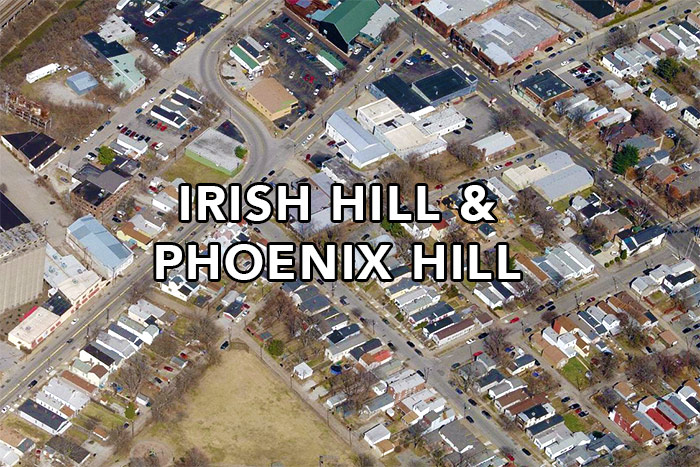
Moving on to the next neighborhood battle, we have the perennial favorite Germantown, Paristown Pointe, Schnitzelburg trio versus the up-and-coming Smoketown-Jackson Park, Shelby Park duo. Also competing this time around in what surely will go down as the “Battle on the Hill” are Crescent Hill, Clifton, Clifton Heights against Phoenix Hill & Irish Hill. Which side of Interstate 64 will win? As always, feel free to vote in both contests. Exit polling in the comments. This race will last until Monday afternoon due to the weekend, so be sure to spread the word.
BS Neighborhood Derby 2009 (3v6-1) FINAL
Total Voters: 138
BS Neighborhood Derby 2009 (3v6-2) FINAL
Total Voters: 146
Germantown, Schnitzelburg, Paristown
Smoketown-Jackson Park, Shelby Park
Crescent Hill, Clifton, Clifton Heights
Phoenix Hill, Irish Hill
The new HOPE VI development named 810 East Broadway held an official ribbon cutting yesterday. We’ve told you about the building all through construction and gave you a tour of the building last week, but the rest of the news came on board today with fresh coverage after the press event. Some news outlets labeled the 22-unit mixed-use building a “housing project.” We feel this term isn’t appropriate for describing the future of public housing in Louisville.
Housing “projects” are what we’re replacing. The old Clarksdale Homes (pictured above) were torn down to create the mixed-use, mixed-income Liberty Green development. 810 East Broadway is part of that transformation. While the building does have sub-market rate apartments, it’s part of a new approach to public housing called scattered site development where small numbers of units occur all throughout the city. The term housing project, for us at least, still carries a negative stigma from the 20th century equivalent and isn’t constructive to describe the new nature of these developments, especially 810 East Broadway.
But it’s really all just word play. This is a development project and it includes housing. Housing project. So, you could suppose that Waterfront Park Place or the Fleur-de-Lis on Main, or Lake Forest subdivision for that matter are all housing projects. But they don’t get headlines that read “City opens new housing project” from Fox 41. Most were more sensitive. The C-J simply calls it “public housing” or an “apartment complex” while Wave 3 says it’s a “housing complex for working families.” WFPL had the best headline reading “New Housing Development Opened Downtown.” It gets to the point without allowing stereotypes to fester beneath stigmatized words. And it generates the most excitement.
This is a new housing development in a beautiful new building that is one of the most contextually sensitive in Louisville. The city should be excited there’s 22 new housing units near downtown and over 3,000 square feet of new market rate retail space on Broadway. This building will be great for the city. The design of the structure (by Kersey & Kersey Architects) may have been a little too good, though. Apparently 810 East Broadway blends so well with its historic surroundings, Wave 3 thought it was a renovation: “The 801 East Broadway building at the corner of Shelby and East Broadway has been completely renovated to provide 16 one-bedroom apartments as well as six two-bedroom apartments.” It’s like the building has been here all along.
Are we concerned about nothing or do you agree 810 East Broadway isn’t a “housing project?” Even Mayor Abramson was delighted that we’ve progressed from warehousing the poor in barracks. Your thoughts in the comments.
Click through for more of the Clarksdale Homes pre-demolition.
While we were visiting the 810 East Broadway development yesterday, we noticed a stretch of metal streetcar track that had been exposed during construction. Louisville once had an extensive streetcar system connecting all of the historic city and many of the tracks are still in place under many streets, although now unusable. They surface from time to time with utility work or construction, like these tracks we found on Preston Street last year. You can sometimes find hints of the tracks beneath asphalt: here, parallel cracks about 4″ wide are a clue at the top of the photo.