

The Clark’s Landing project, a proposed $500 million mixed-use neighborhood to be created around the old Colgate factory and clock, won approval from the Clarksville Town Council this week and will be rezoned, block by block to accommodate a new vibrant community of condos, apartments, retail, offices, a hotel, and convention space.
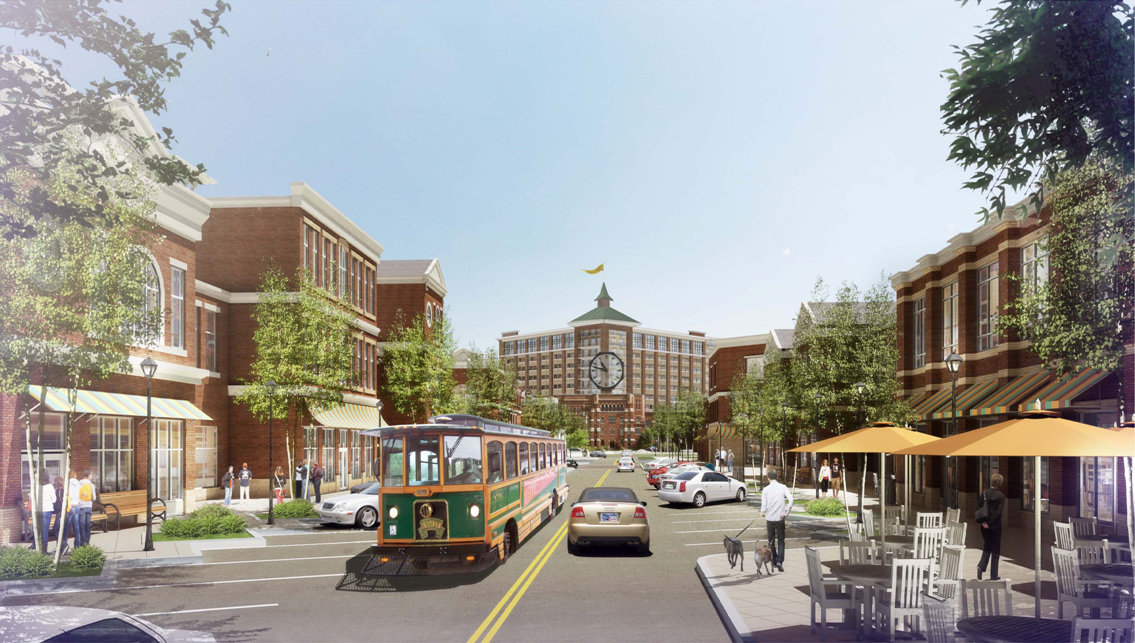
The city has been working with the Estopinal Group, an architecture firm in Jeffersonville, to create a vision for what the area could potentially become. The concept plan will later guide a master plan that will be put together over the next year or so.
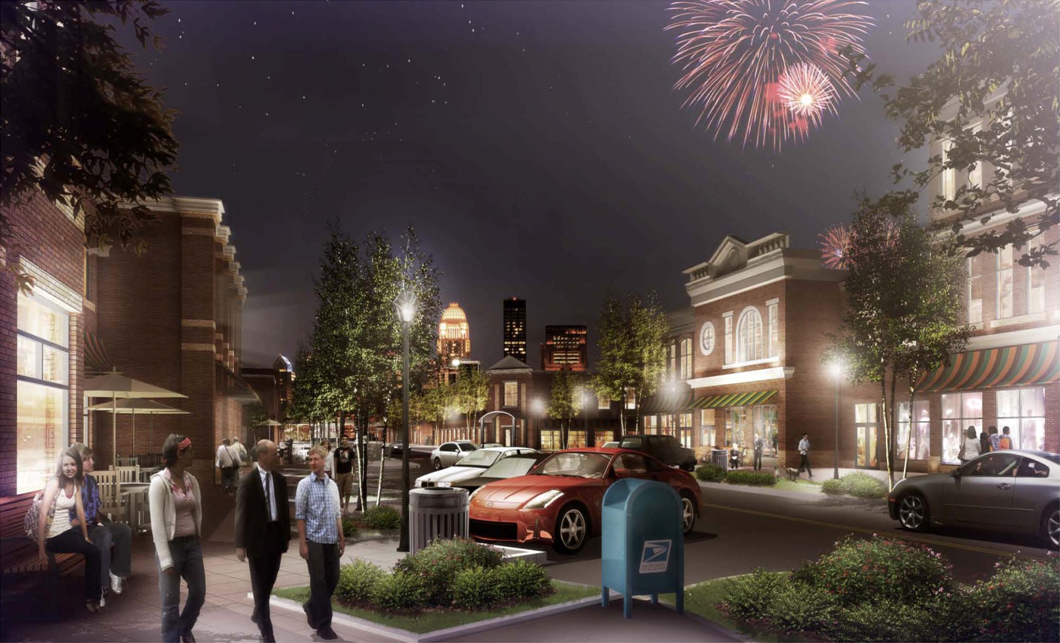
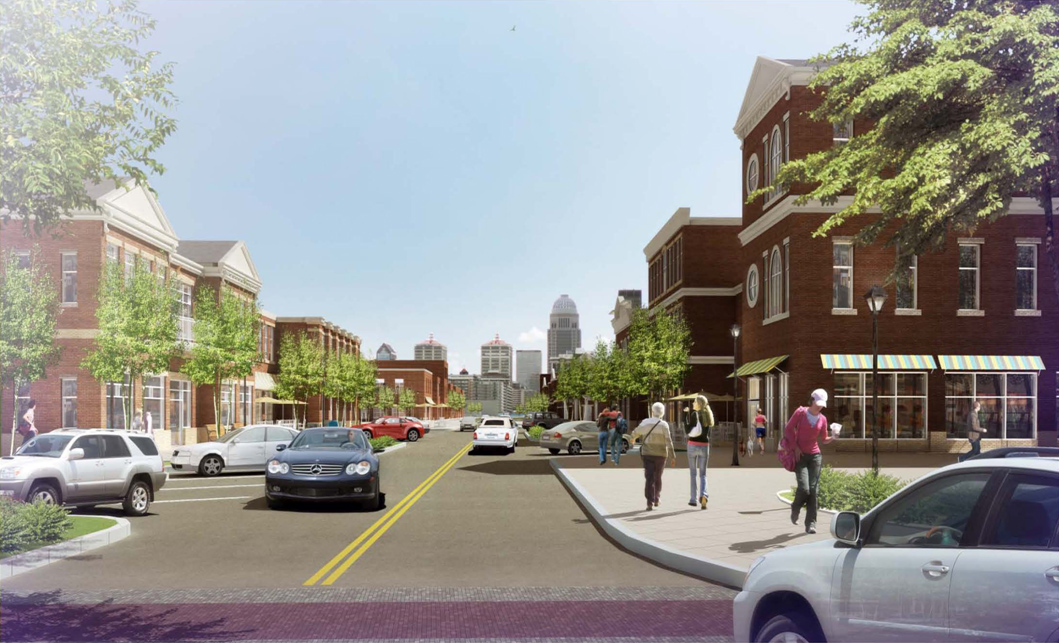
In the mean-time, Clarksville and TEG have given us some development eye-candy to keep us excited in the project. While they represent only the vision of the project, we can see from the renderings that the new town center will keep a traditional aesthetic that brings to mind Norton Commons in suburban Louisville.
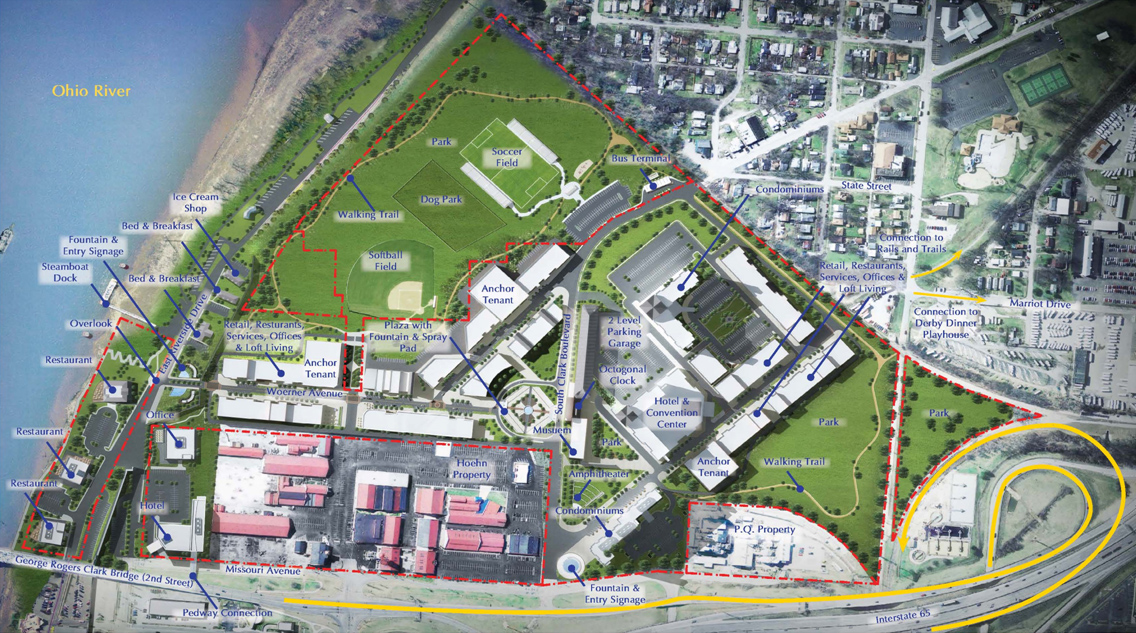
The project seeks to maximize views of the river and the Louisville skyline, so buildings diminish in height to the south. The investors also hope to maximize profit, so we could potentially see the 2 to 3 story buildings grow to 3 to 4 (or even 5?) levels. We think the opportunity to create as dense a project as possible so close to the river and epicenter of the metropolitan region is best. Regardless, taller structures including condo towers and a hotel behind the Colgate clock will rise to heights that create Southern Indiana’s own skyline.
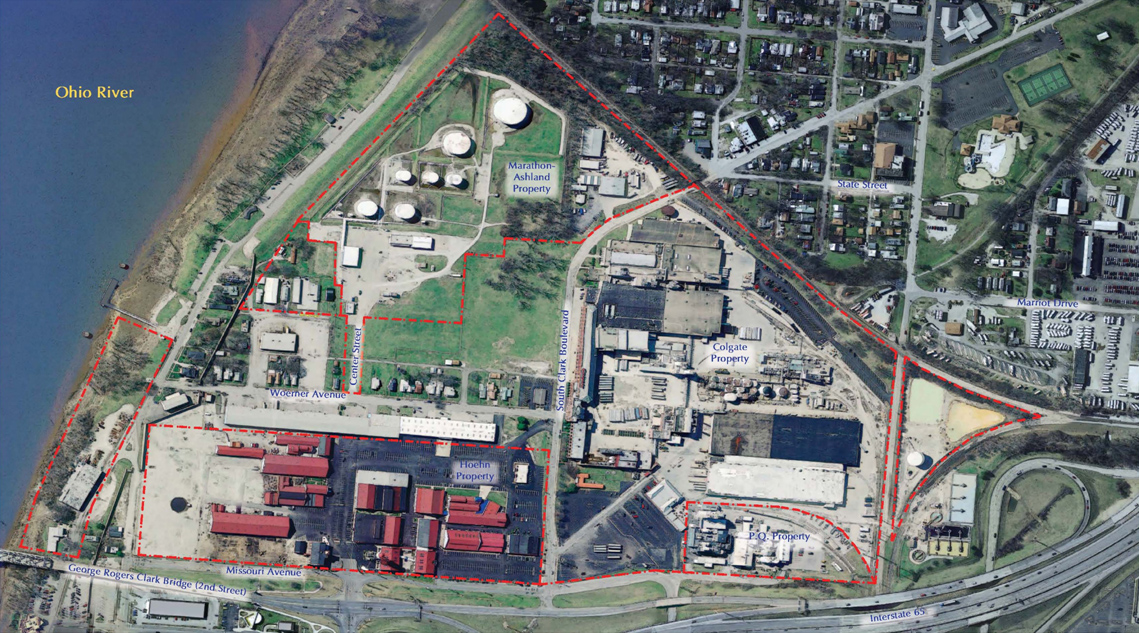
Fox 41 News also reports that a sewage treatment plant located behind the Colgate plant may be relocated to avoid a potential stench lingering in the area. Clarksville is currently working with Marathon / Ashland Oil to remove the storage tanks near the Ohio River.
- The Estopinal Group (Official Site)
- Clark’s Landing Project Brings New Urbanism To Waterfront (Broken Sidewalk)
- All renderings courtesy the Town of Clarksville



Fantastic redevelopment opportunity – “If you build it they will come”
The vision is a good fist start but there needs greater focus on sustainability issues and land-use transportation connections. The site has a unique regional place, in that could be a catalyst for transit-oriented development – tying into existing bus corridors and (potentially) future light rail spine. Unless a less auto-oriented vision can be articulated it may end up have the same jobs-to-housing balance and livability issues that many places in Southern Indiana currently have.
I am concerned about the traffic flow through the old neighborhoods that surround this development area…
Comments are closed.