
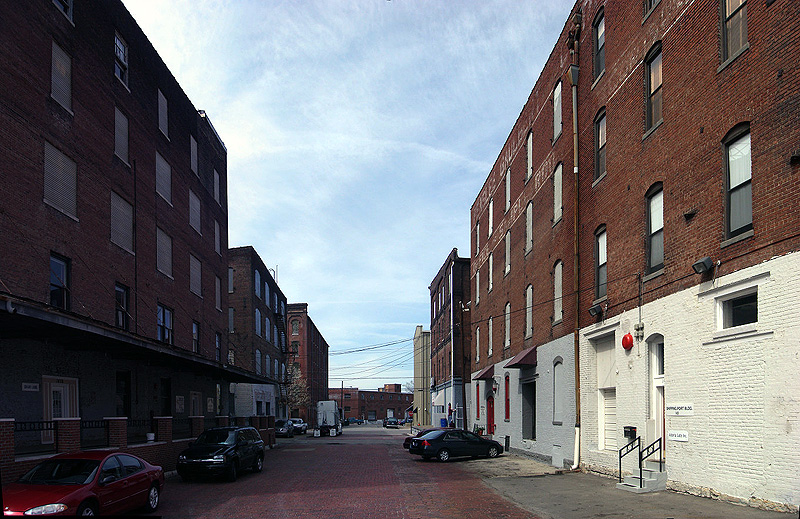
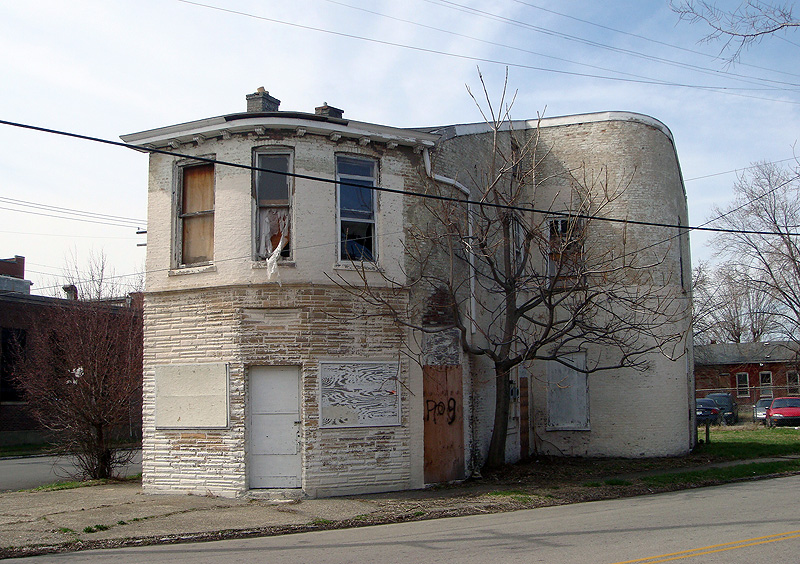
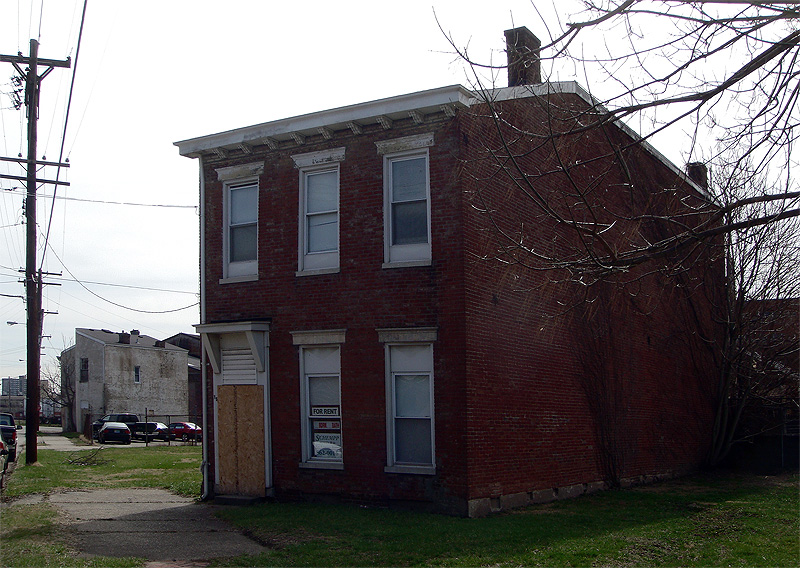
At the end of August, we told you about a proposal to revitalize the Shippingport neighborhood directly west of Downtown Louisville along the Ohio River. The next segment of our Shippingport coverage is to take a look at the existing building stock. This sampling will mainly cover commercial and warehouse buildings, but there’s a sizeable and sturdy residential component to the neighborhood as well that could provide easy renovation targets. Many brick and wooden shotgun houses and two-story townhomes line the side streets in the neighborhood and lend a similar quality as many of Louisville’s other historic neighborhoods.
Shippingport is technically part of the Portland neighborhood, but we feel the area is strong enough and far enough removed from the heart of Portland that it can take on its own neighborhood identity. We’re using roughly the same boundaries as the UK student proposal, basically west of Ninth Street, north of Main or Market Streets, south of the Ohio River, with a western boundary somewhere around 22nd Street. (We’re not including the area around Boone Square Park, though.) Those are only approximate borders for the purpose of discussion.
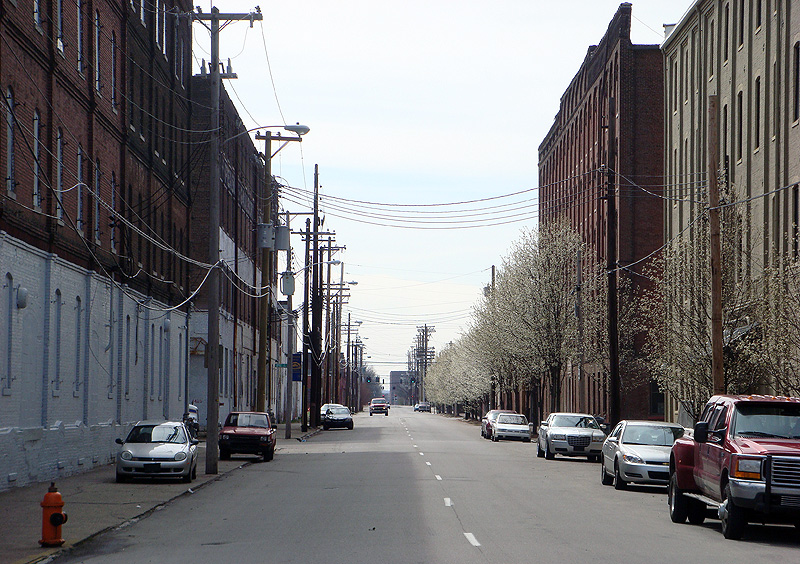
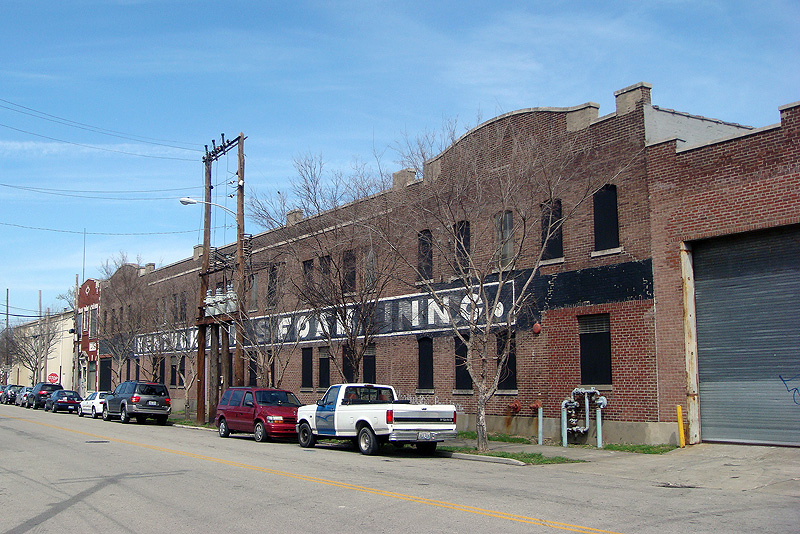
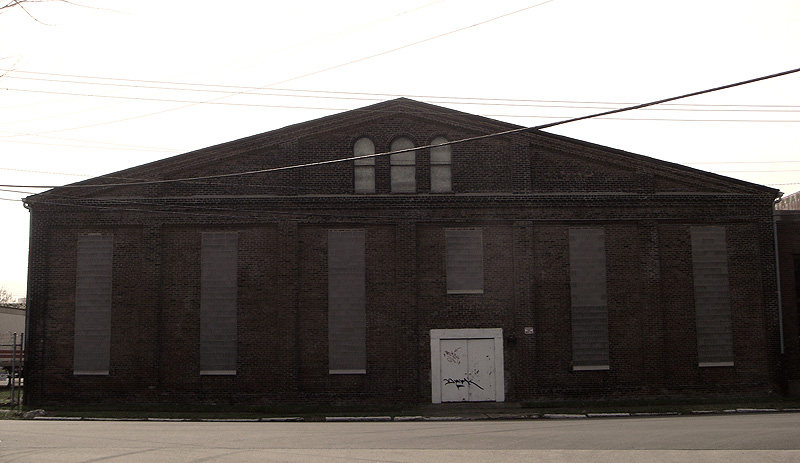
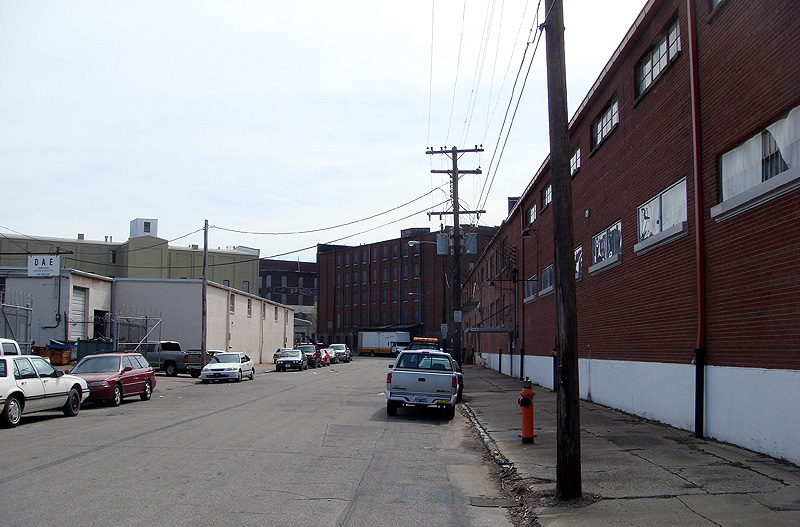
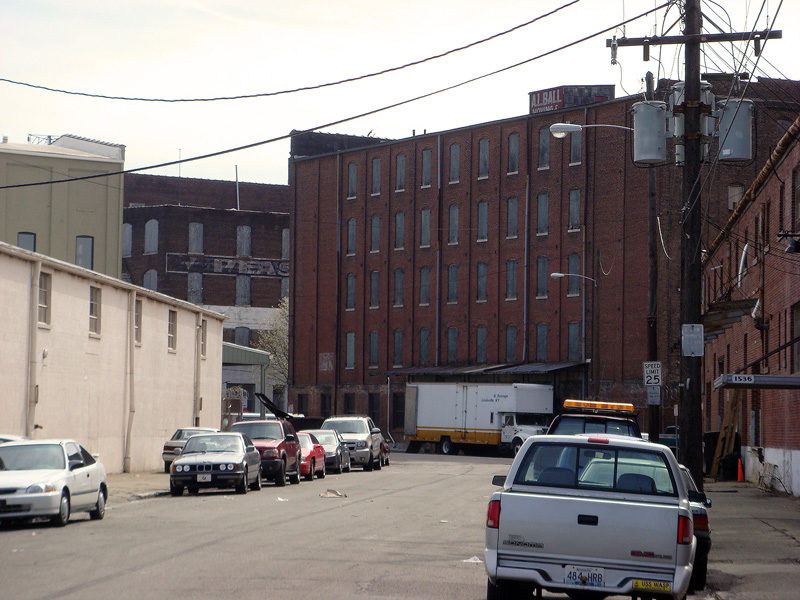
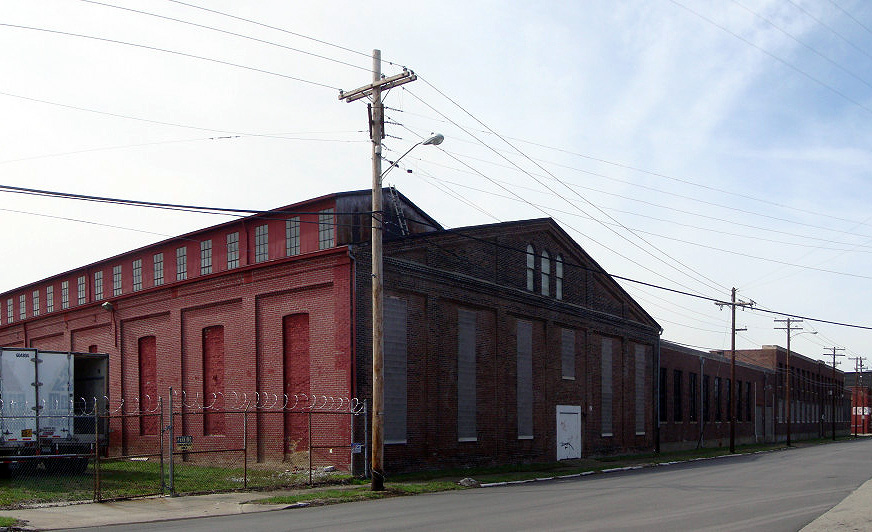
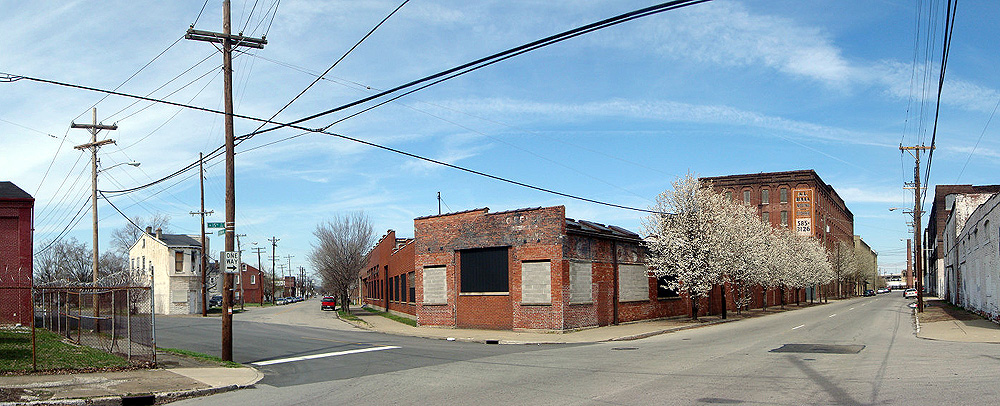
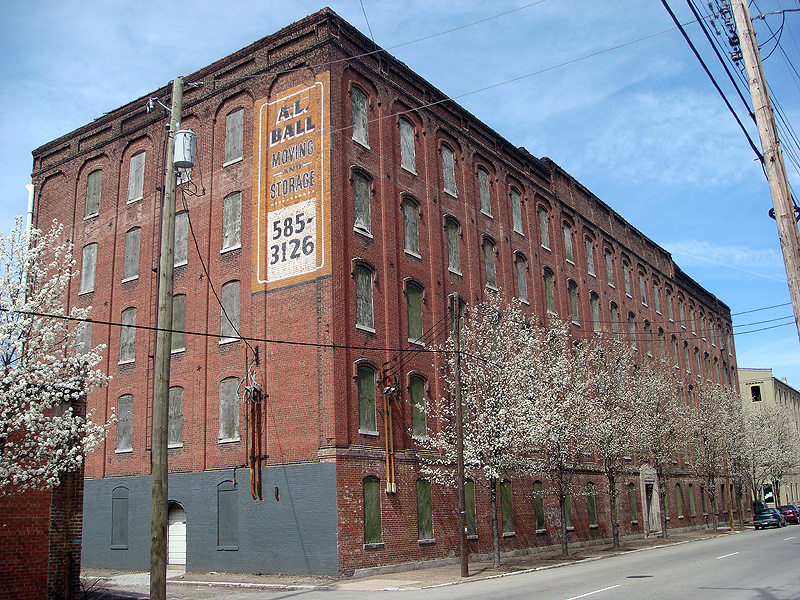
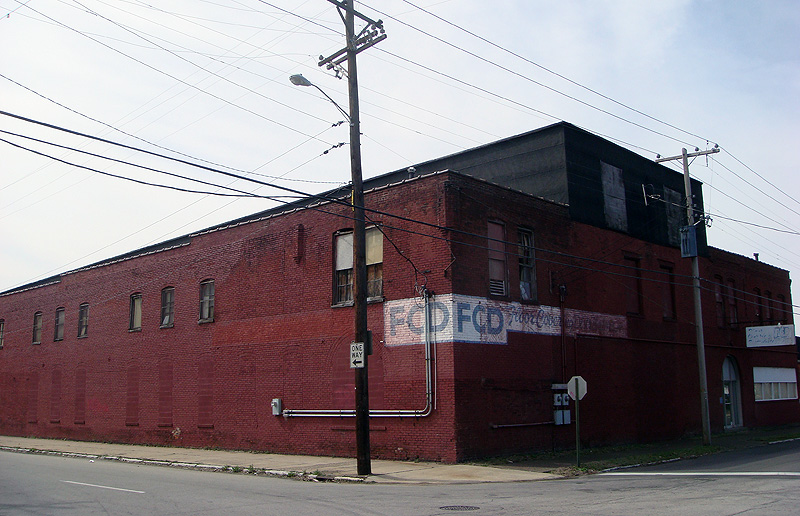
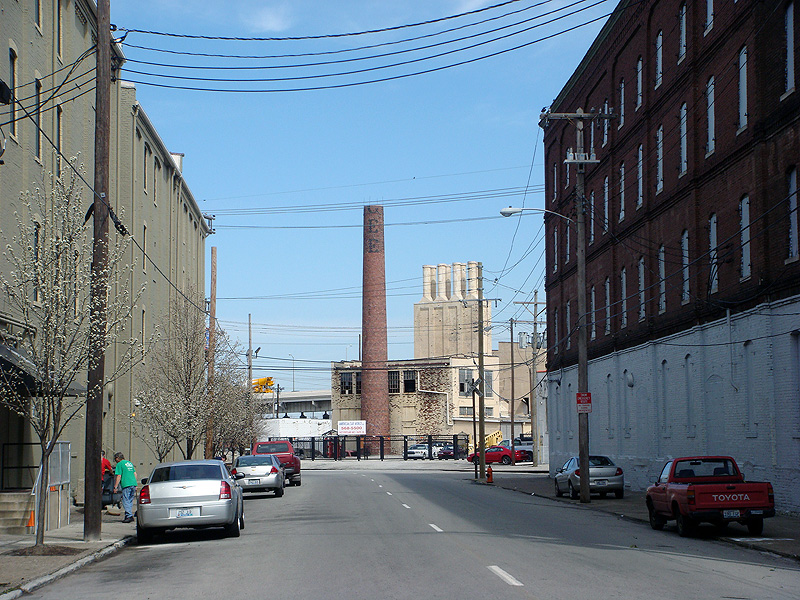
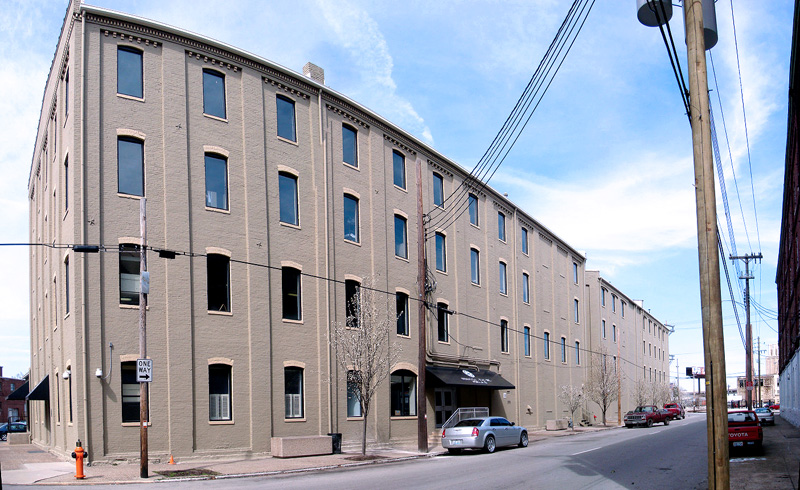
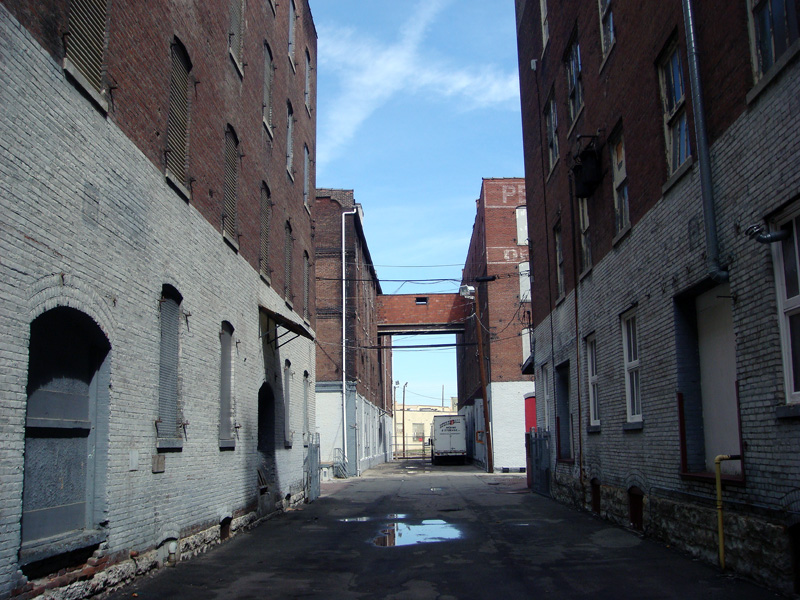
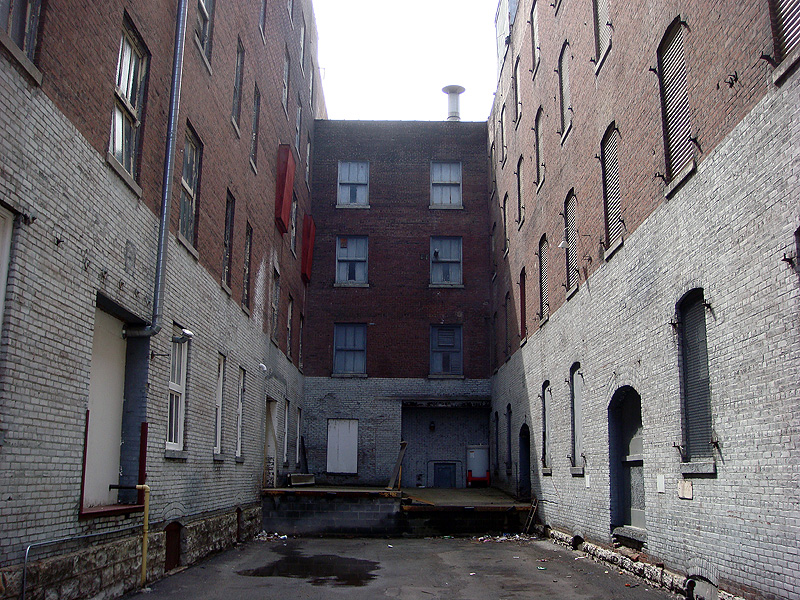
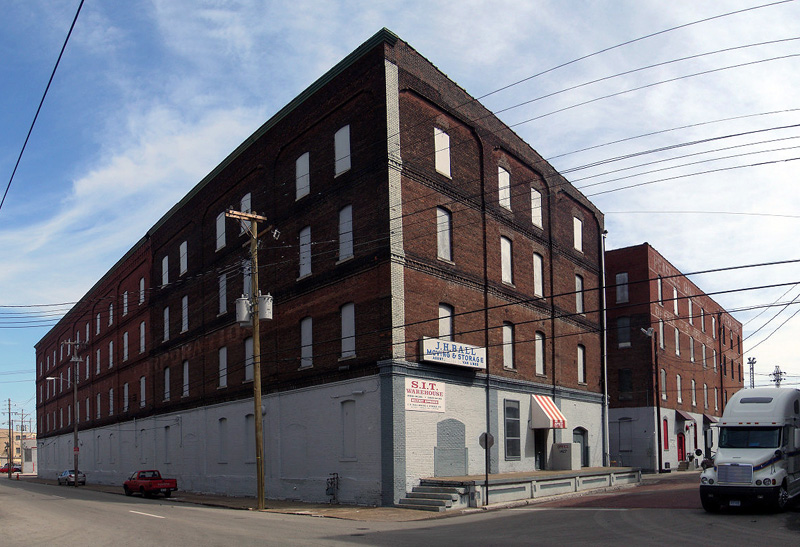
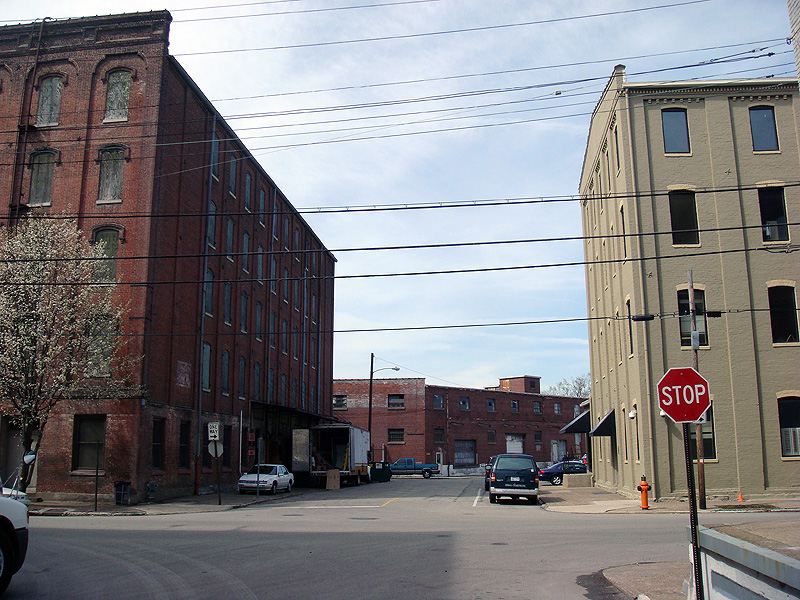
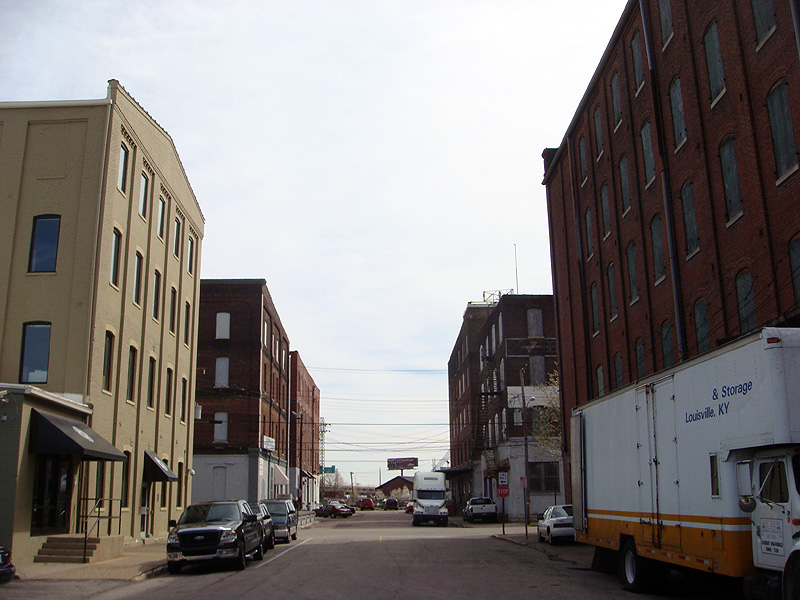
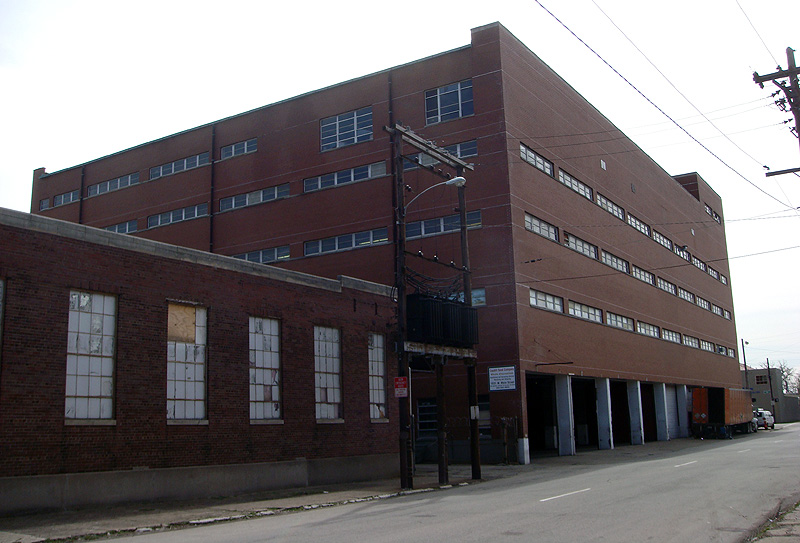
In that boundary, three distinct typological areas are visible: an intact urban neighborhood on the western portion, a Warehouse District in the middle, and barren industrial wasteland on the eastern portion. We already reviewed the barren wasteland area roughly between Ninth Street and the 14th Street elevated rail line in an earlier post. After the click is a gallery of the Warehouse District centered around 15th Street moving west to around 18th Street with some commentary on the building stock. Later, we’ll start to analyze each proposal as it applies to each neighborhood zone.
- Students Propose A Shippingport Renaissance (Broken Sidewalk)
- Enormous Potential In Shippingport’s Barren Fields (Broken Sidewalk)

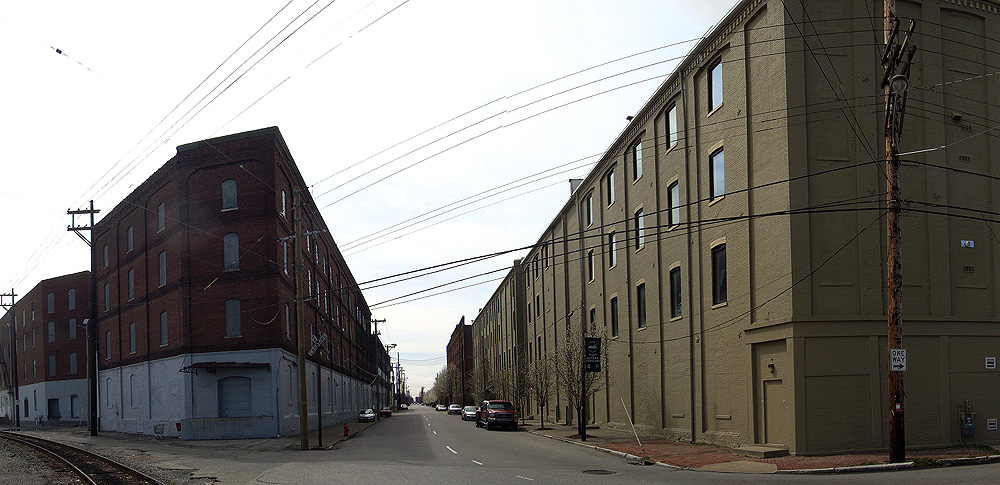
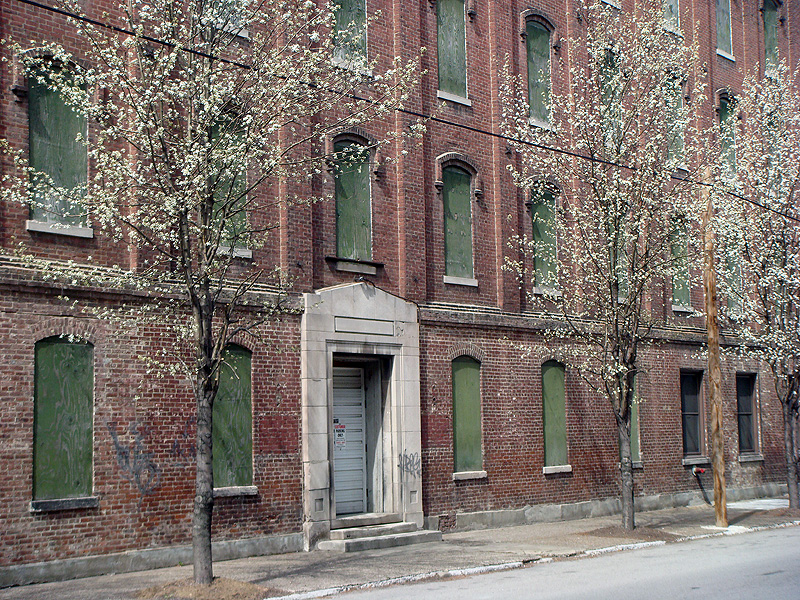
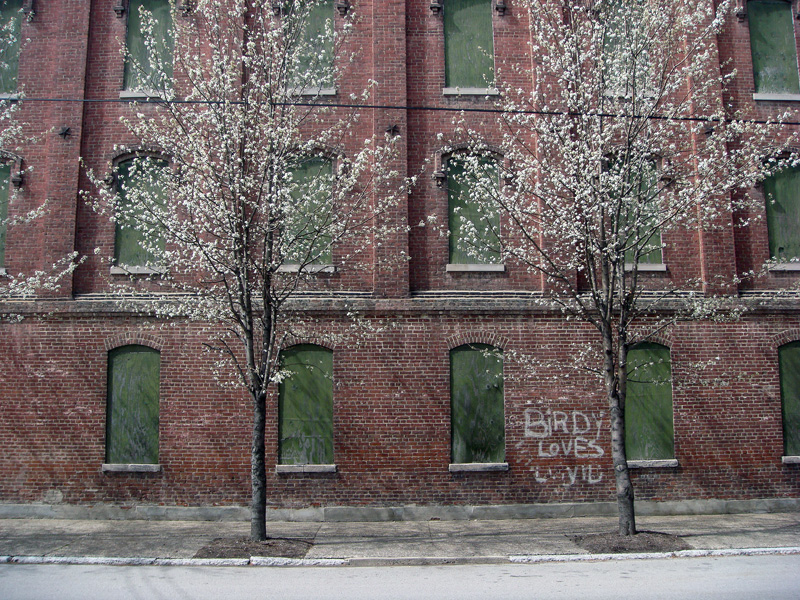
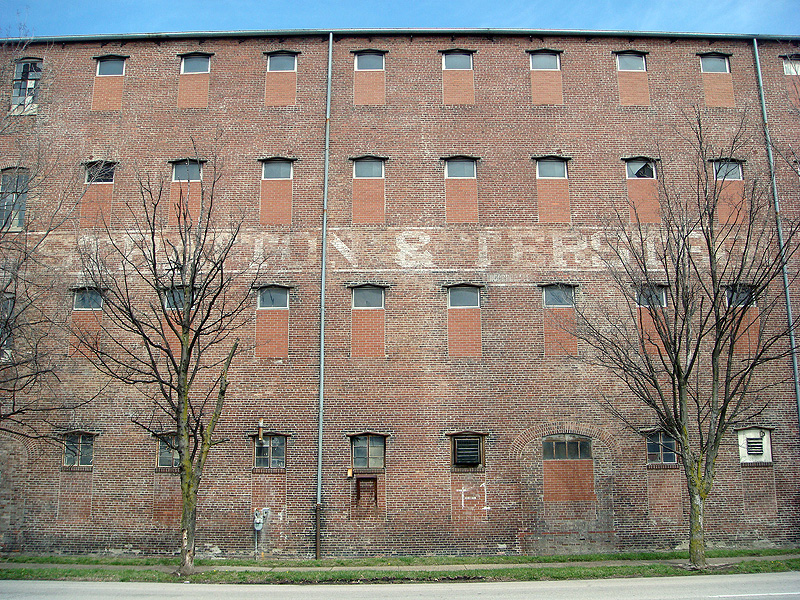
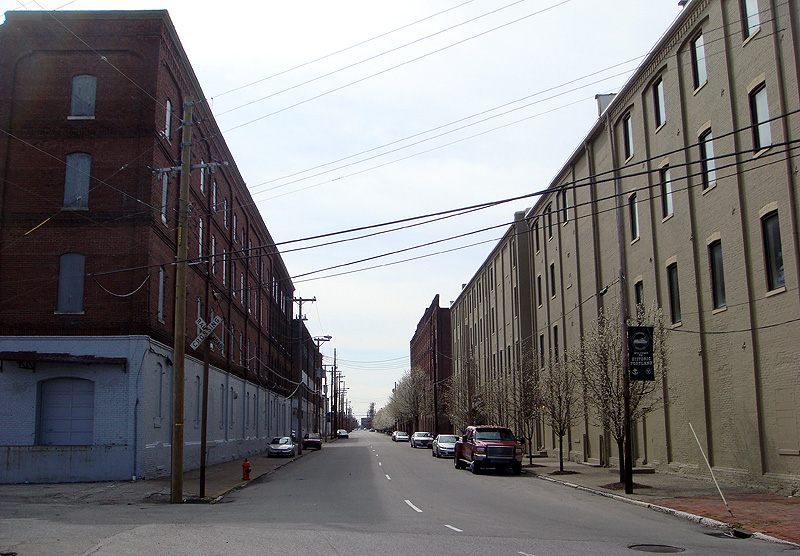
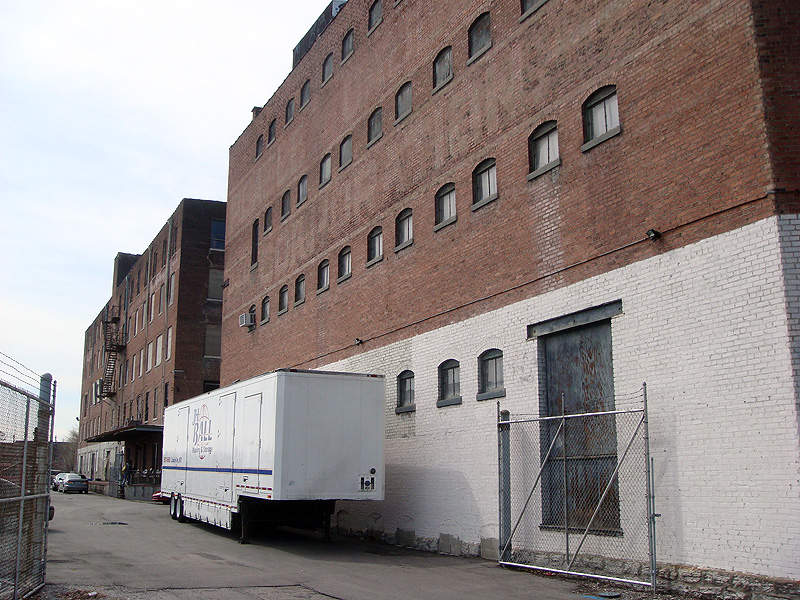
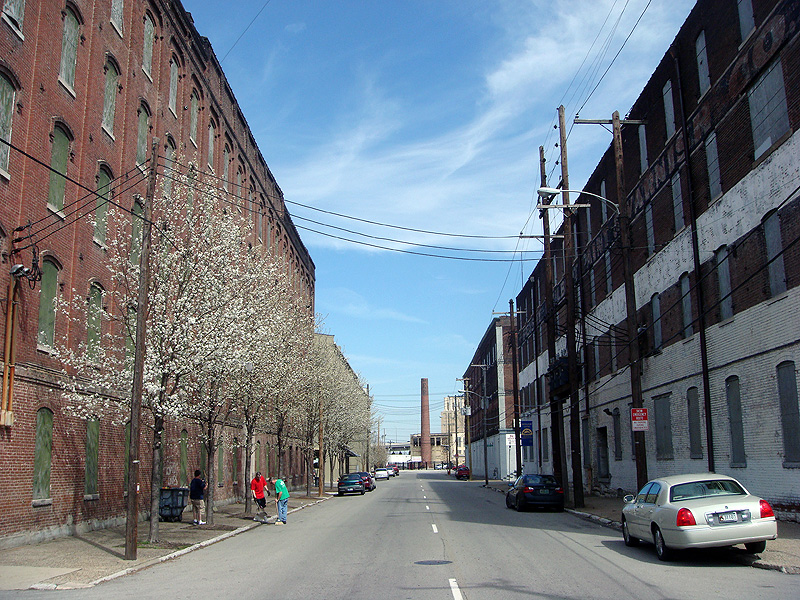
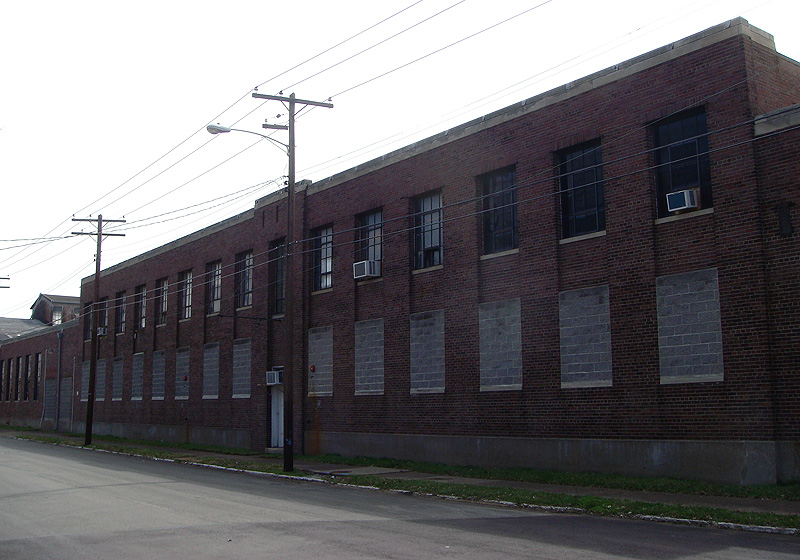
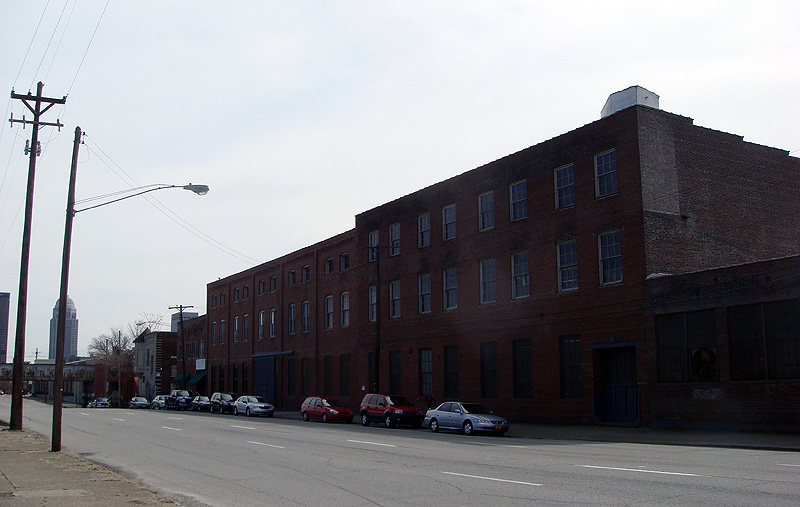
First of all, if you haven’t spent some time walking along 15th Street north of Main Street, you are missing out on one of the most interesting spots in all of Louisville. Many large warehouses once used for paint and hardware manufacturing line the street and offer a fully intact streetscape complete with flowering pear trees and brick sidewalks in spots (the best time to visit is in the Spring when the trees are in bloom, but any time of year is worth a trip).
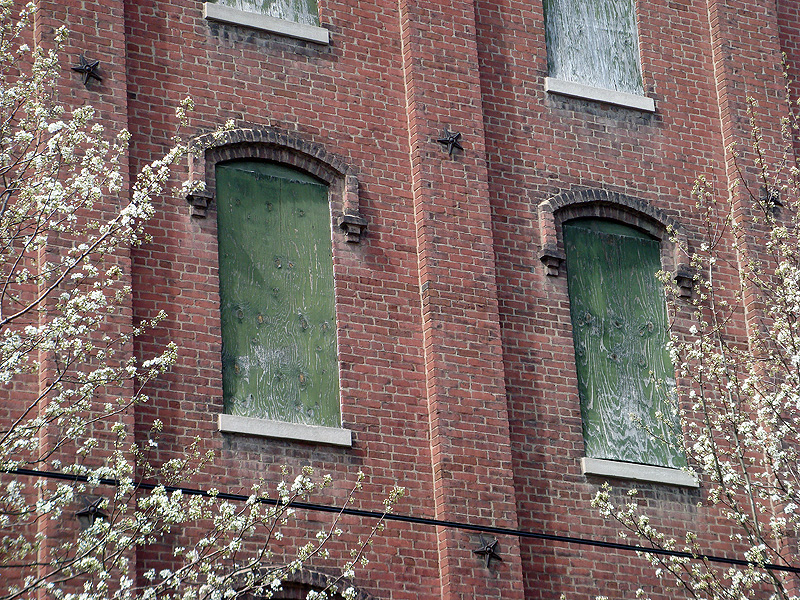
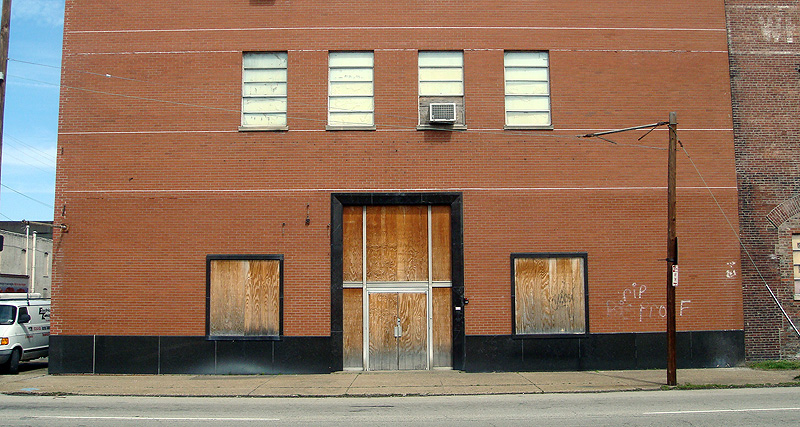
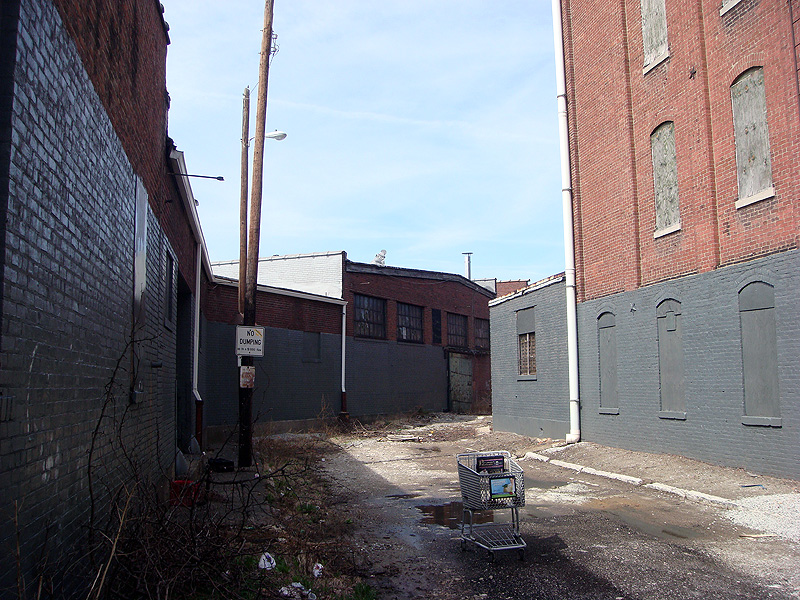
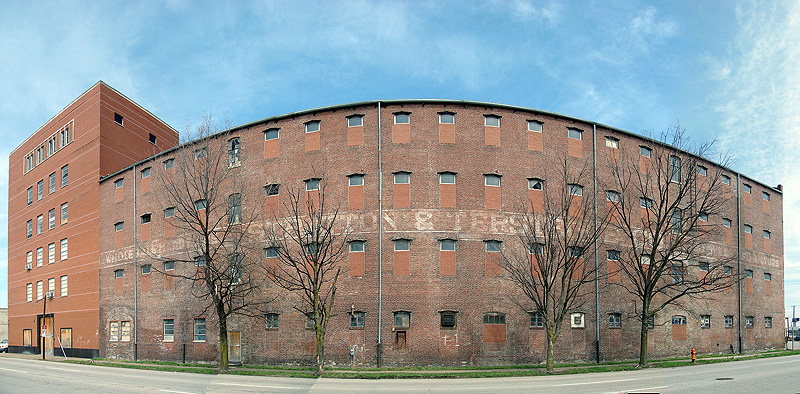
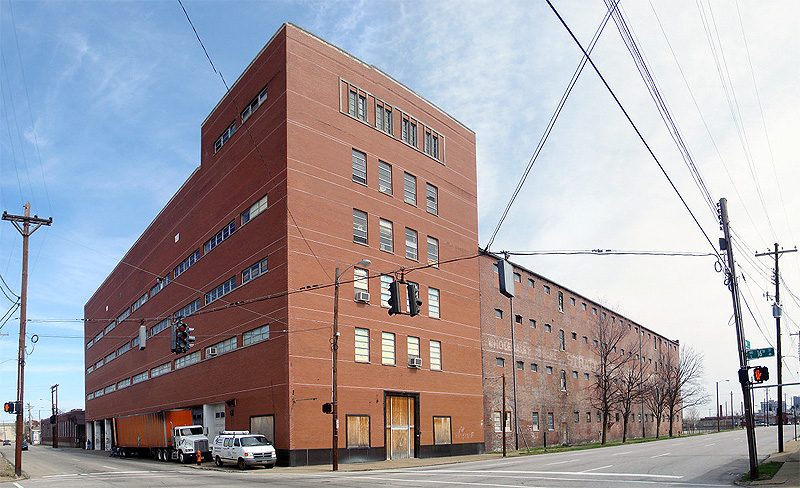
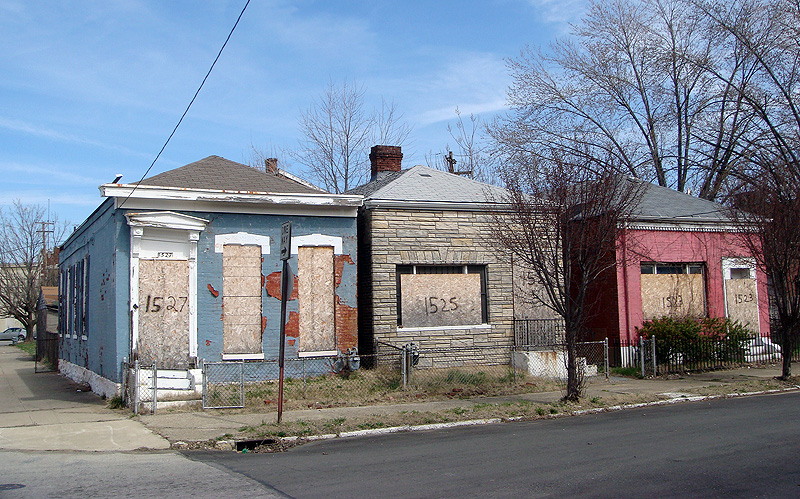
While the buildings can appear abandoned and forlorn with boarded up windows, each is actively used for storage by several local companies and one is used by Dismas Charities. Moving west along Bank Street, a commercial building resembling a flatiron shape on the acute intersection with Rowan leads to a former Coca-Cola bottling plant and to several excellent examples of brick shotgun houses. Interspersed in the area are more large warehouses used by various companies in town.
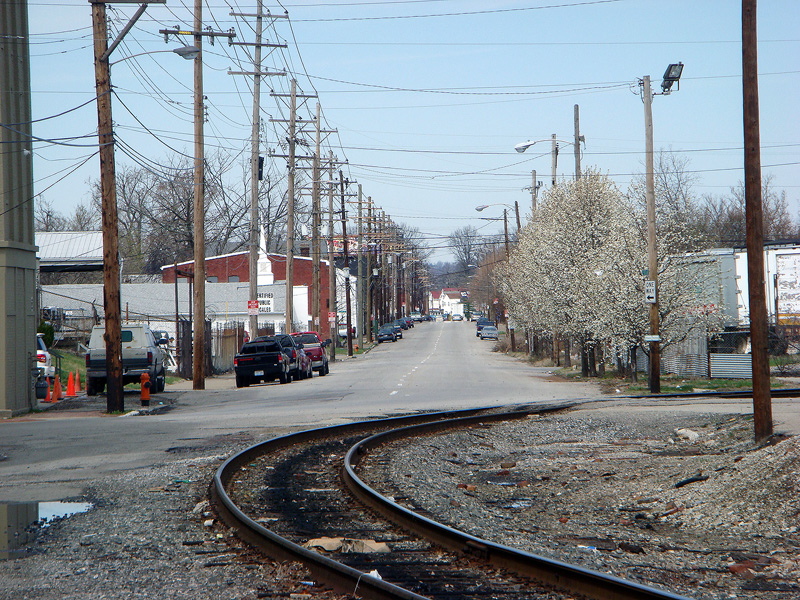
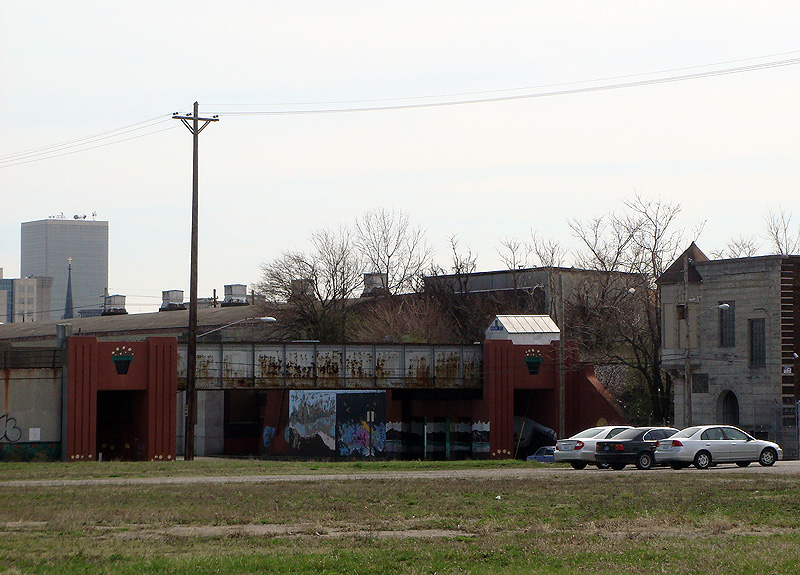
One of the major challenges in Shippingport is the division created by an elevated railroad and the elevated Interstate 64 that slice the neighborhood into pieces and separate it from the Portland Canal and Ohio River. The floodwall also presents a barrier to part of the neighborhood. These obstacles can be overcome with various design and infrastructure improvements. We won’t go into those here.
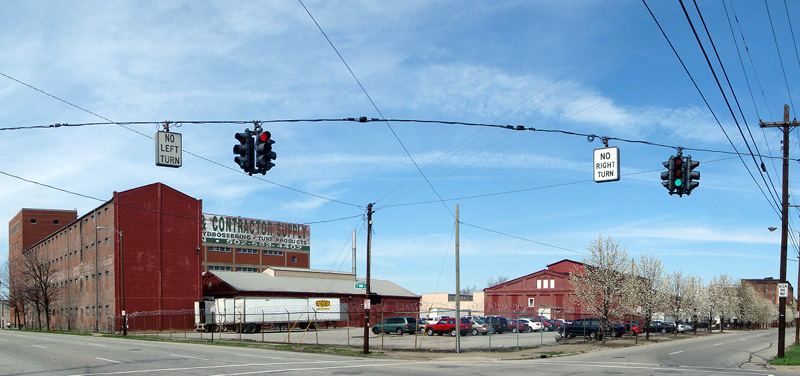
Another quality of the area, which can be viewed as both a challenge and a great benefit, is the street grid. As you can see from the map, the area includes the confluence of two unique grids shaped by curving riverbanks. This condition creates several acute intersections which can provide interest to the urban environment but present minor challenges in building to the sidewalk. Small triangular plazas can be found on Bank Street and could be enhanced by redevelopment. There are many opportunities to clarify the grid and overcome boundary issues, as well, as missing portions are filled in on now vacant land.
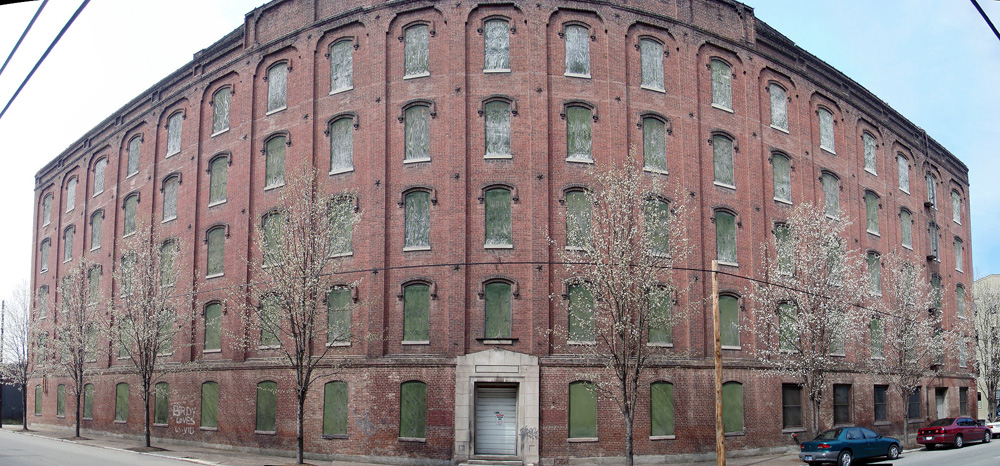
Concerning the existing neighborhood fabric, there are too many boarded up structures and abandoned lots. Many structures, houses, warehouses, and commercial buildings, are in good shape and in use, but others could be fixed up to the benefit of the area. Reuse of many of the warehouses is more challenging as property values in the area would likely need to increase before large scale adaptive reuse developments could become feasible. There’s plenty of infill potential in the neighborhood, too, and Bank Street, Portland Avenue, and Northwestern Parkway offer potential for commercial growth.
These are just some ideas and observation on the Shippingport neighborhood. Have you spent time in the area? What are your observations and ideas? Shippingport’s central location, historic neighborhood fabric, and stock of warehouses provide an excellent starting point for revitalization, but how do we begin to get there? Next, we’ll start to take a look at the proposals for redevelopment of the area put forth by design students at the University of Kentucky.









The potential of this area is pretty overwhelming. Thanks for the post, great stuff!
I beleive this is straight brilliant coverage of this atrocity. It amazes me how the local government can write off whole sections of the city without any backlash from the people. This is prime land that could be used for many, many purposes. Louisville has so much potential, and so little has been done to reach that potential. Even if the Ohio River Bridges project were to proceed as planned, there is so much more than can be done with this land that could offset some of the loss of land that will take place in Butchertown, Waterfront Park, and along the I-65 corridor.
my faves are the narrow freight depot buildings that remain along rowan, 14th, 15th, and the one still in use as a lumber yard storage building.
My wife and I took a drive through Shippingport and Portland today… snuck in the Portland Museum: they were redoing the exhibit, but the nice folks let us in anyway. We went over to the McAlpine Dam and looked around, too.
I grew up in the South and East Ends. This western area was a total blank – and now a total surprise to me. I was away – in Rochester NY – half my life, and now, after being back four years, I’m trying to reacquaint myself with my hometown, and introduce myself to some parts.
After roving around S’port and Portland and the West End, I don’t really know what to say or think or propose. What strikes me is the randomness of the area: great old stock of housing and commercial buildings mixed among the tawdry and derelict and recently decayed… sudden small strips of residences in fields, or among warehouses, or… nowhere. It is the absence of the beginning of coherence that strikes me.
When I looked at the UK student project I was concerned about whether the natural placeness of the area was preserved or obliterated. On seeing it first-hand, I wonder if there IS a placeness in many parts.
I guess I’m just saying that it seems that trying to find a messy coherence (I’m always afraid of total coherence) is the first assignment. Any small single project will be just that – an island.
The eastern section of Portland, often referred to as Shippingport seems to be one of the most under-appreciated areas surrounding the CBD. It seems that there is more of a psychological barrier than any other as to why this area has not seen some serious consideration. The 9th street overpass has had an incredible impact on westward growth of the CBD and I have not seen any progressive, large scale proposals for this area since I moved here in 1998. This area could have been a great location for the new Arena for instance.
I personally feel that the strongest argument for the 86-64 proposal is that it would open up the area west of 9th street. Though I would also like to see the current waterfront unencumbered by an elevated freeway, the benefit would seem to be the greatest for the large swaths of land in the Shippingport Business District. Could you imagine the views of the river and city from that location?
I love this city and feel that there is a lot of potential here, but I cannot help but feel we are being left behind by our regional competitors such as Nashville, Indy, and Cincy in terms of forward thinking and progressive development. I have often hear Louisville compared to Portland, Oregon but after having been there, I would say that the other large cities in our region would have a much stronger argument for such a comparison.
I appreciate the thoughtful proposals for sites in Louisville put forth by brokensidewalk and feel we need to increase the number of people working on these ideas, even if they are not completely feasible, at least to generate discussion and start getting the wheels turning.
ha! my grad thesis (2004) was a proposal for the redevelopment of 9th to 15th north of main, including … the a new arena at 12th and main!
it actually worked out pretty well in conjunction with a west waterfront park.
My Grandmother Katharina Eichert/App lived at 1527 Rowan (photo of blue shotgun). She died there of TB in 1921. Thanks for your site. It’s great.
Please, everyone, let me point you to the Portland Neighborhood Plan that our VERY active neighborhood organization, Portland Now, worked on for three years with the CenterFor Neighborhoods, holding public meetings and surveys attended by 100’s of residents, and finally approved by Metro Gov. [If you don’t want to read further, just contact me on Facebook.]
The down-zoning portion of our Plan is still in progress, and many, many WINS have been accomplished toward it, most especially the revitalization goals, including investment in owner occupied homes. Yes, we need MORE of that!
This revitalization strategy for the Shippingport area has been on the table from Metro Gov AND Portland Now for a long time, AS PORTLAND. It shows up in our Plan as a recommendation for a Small Area Study, that could result in a development like this one about which Branden Klayko writes.
BUT IF there’s a NEW boundary for PORTLAND (west of 9th St) it shouldn’t be anything further west than 15th St! We fought to hold that boundary before, and I would fight for it again. There are historic ties that unite us all as Portland, and Gil Holland’s Portland Investment Iniative has promised many times that “Portland doesn’t need to be rebranded.”
That east side of PORTLAND may be the poorest section of Portland, with the highest number of vacancies, but there is still a whole community of traditional, long time residents who DO still live there – though granted, not east of 15th, which is ripe for redevelopment for all of the reasons you mention. But I can’t see that unilaterally renaming a whole part of a traditional neighborhood as being good for “integration”, only for “colonization” and marketing to new buyers. But it’s not up to me. We rely on the good will and cooperative spirit of investors! (and planners)
That’s Judy Schroeder, Branden…. the field skipped away from me! Portland Now Revitalization Committee members are happy to talk! Please connect.